
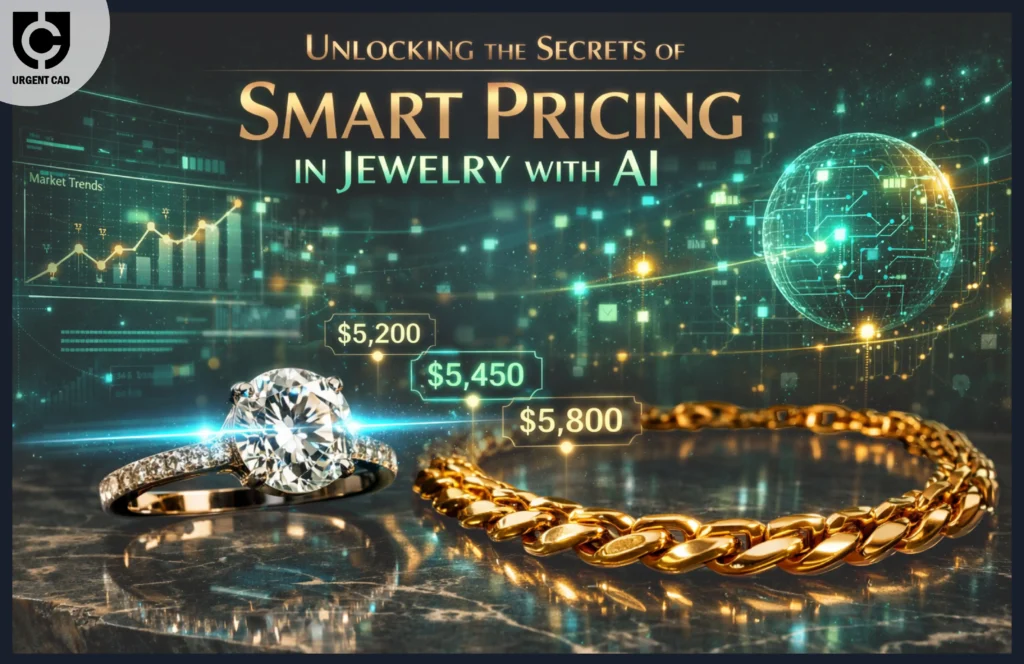
Preface to Smart Pricing in the Jewelry Industry
Jewelry has always been more than just metals and gemstones. It represents emotion, identity, status, and sometimes even heritage. But when it comes to pricing jewelry, emotions alone don’t pay the bills. For decades, jewelers relied on instinct, experience, and rough formulas to decide prices. Today, that approach is changing rapidly.
Artificial Intelligence (AI) is transforming how jewelry prices are calculated, optimized, and personalized. Smart pricing is no longer a luxury it is becoming a competitive necessity.
Why Pricing Is the Heart of the Jewelry Business
Pricing in jewelry is complex. Set prices too high, and customers walk away. Set them too low, and profits evaporate. Unlike many industries, jewelry pricing must balance creativity, material value, brand perception, and market demand.
The Shift from Traditional Pricing to AI-Driven Strategies
Traditional pricing methods worked when markets were stable. Today’s jewelry market is dynamic. Trends change overnight, gold prices fluctuate, and consumer preferences evolve rapidly. AI helps jewelers respond to these changes in real time.
Understanding Smart Pricing
Smart pricing is a data-driven approach to setting prices that adapts to market conditions, customer behavior, and business objectives.
What Is Smart Pricing?
Smart pricing uses algorithms and data analytics to determine the optimal price for a product at a given moment. It replaces guesswork with precision.
Difference Between Static and Dynamic Pricing
Static pricing uses a single fixed price for everyone. Dynamic pricing adjusts prices based on factors like demand, competition, and customer behavior. AI makes dynamic pricing scalable and accurate.
Role of Data in Modern Pricing Models
Data is the fuel of smart pricing. From customer browsing patterns to global commodity rates, AI processes massive datasets to uncover pricing opportunities that humans may miss.
The Role of AI in Jewelry Pricing
AI does not just crunch numbers it identifies patterns and insights.
How AI Analyzes Market Trends
AI systems analyze market trends, social media signals, sales data, and competitor prices. This holistic view helps jewelers predict what customers are willing to pay.
Machine Learning in Demand Forecasting
Machine learning models predict demand for specific designs, materials, and styles. If rose gold chokers suddenly trend, AI detects it early and adjusts prices accordingly.
AI-Powered Competitor Analysis
Instead of manually tracking competitors, AI continuously monitors rival pricing and market positioning, helping jewelers stay competitive without sacrificing margins.
Key Factors Affecting Jewelry Pricing
Material Costs and Market Volatility
Gold, silver, platinum, and gemstones fluctuate daily. AI integrates real-time commodity data to keep prices aligned with market realities.
Design Complexity and Craftsmanship
A handcrafted piece with intricate detailing deserves a premium. AI can quantify design complexity using digital design tools and production parameters.
Brand Value and Customer Perception
Luxury brands command higher prices because customers perceive greater value. AI analyzes brand sentiment and customer loyalty to optimize pricing strategies.
Regional and Seasonal Demand
Wedding seasons, festivals, and regional preferences impact jewelry sales. AI identifies these patterns and adjusts prices accordingly.
Benefits of AI-Based Smart Pricing
- Increased Profitability: Identifies optimal price points without losing customers.
- Improved Customer Satisfaction: Prices feel fair and transparent.
- Faster Decision-Making: Real-time insights eliminate manual delays.
- Reduced Pricing Errors: Automation minimizes human mistakes.
Real-World Applications of AI in Jewelry Pricing
E-Commerce Platforms
Online jewelry stores use AI to personalize pricing and offers. If a customer frequently buys premium products, AI adjusts recommendations and pricing accordingly.
Retail Stores and Omnichannel Pricing
AI ensures consistent pricing across physical stores, websites, and marketplaces, delivering a seamless customer experience.
Custom Jewelry Pricing Models
For custom-made jewelry, AI calculates prices based on design complexity, materials, and production time, improving transparency and accuracy.
Smart Pricing vs Traditional Pricing
Cost-Based Pricing Limitations
Traditional cost-plus pricing ignores market demand and customer perception. It is simple but often ineffective.
Value-Based Pricing with AI
AI enables value-based pricing by analyzing what customers are willing to pay, aligning prices with perceived value.
Case Study Comparison
Two identical rings receive the same price under traditional pricing. AI-driven pricing identifies that one appeals more to luxury buyers and adjusts its price, increasing profit without additional cost.
How Jewelry Brands Can Implement AI Pricing
Data Collection Strategies
Start by collecting data from sales, customer interactions, market trends, and production processes.
Choosing the Right AI Tools
Select AI solutions tailored to your business size and objectives.
Integration with Existing Systems
AI should integrate smoothly with ERP, CRM, and design software for maximum efficiency.
The Role of UrgentCAD in Jewelry Pricing Innovation
Digital design tools play a vital role in smart pricing. Platforms like UrgentCAD bridge the gap between creativity and data.
Digital Design and Pricing Collaboration
When design data meets AI analytics, pricing becomes more accurate and strategic.
Enhancing Accuracy with Intelligent Tools
Combining digital design parameters with AI insights allows jewelers to predict costs and set prices with precision.
Challenges of AI in Jewelry Pricing
- Data Quality Issues: Poor data leads to inaccurate pricing.
- Ethical and Transparency Concerns: Dynamic pricing must remain fair and clear.
- Balancing Automation and Human Judgment: AI should complement, not replace, expertise.
Future Trends in AI-Driven Jewelry Pricing
- Hyper-Personalized Pricing
- Blockchain for Transparent Pricing
- AI-Driven Global Commerce
Practical Tips for Jewelers
- Start small with AI pricing pilots
- Combine creativity with data insights
Conclusion
Smart pricing powered by AI is reshaping the jewelry industry. It turns pricing from guesswork into a strategic advantage. Jewelers who adopt AI today will lead the market tomorrow, while those who ignore it risk falling behind.
In an industry where every gram of gold and every sparkle of a gemstone matters, AI brings clarity, accuracy, and confidence. The future of jewelry pricing isn’t just smart it’s intelligent.
FAQs
- How does AI improve jewelry pricing accuracy?
AI analyzes large datasets, market trends, and customer behavior to determine optimal prices. - Is AI pricing suitable for small jewelry businesses?
Yes, scalable AI tools are available for businesses of all sizes. - Can AI replace human decision-making?
No, AI supports decisions but human creativity and judgment remain essential. - What data is needed for smart pricing?
Sales data, customer behavior, market trends, material costs, and competitor prices. - Is smart pricing the future of the jewelry industry?
Yes, AI-driven pricing is becoming a standard practice.

