
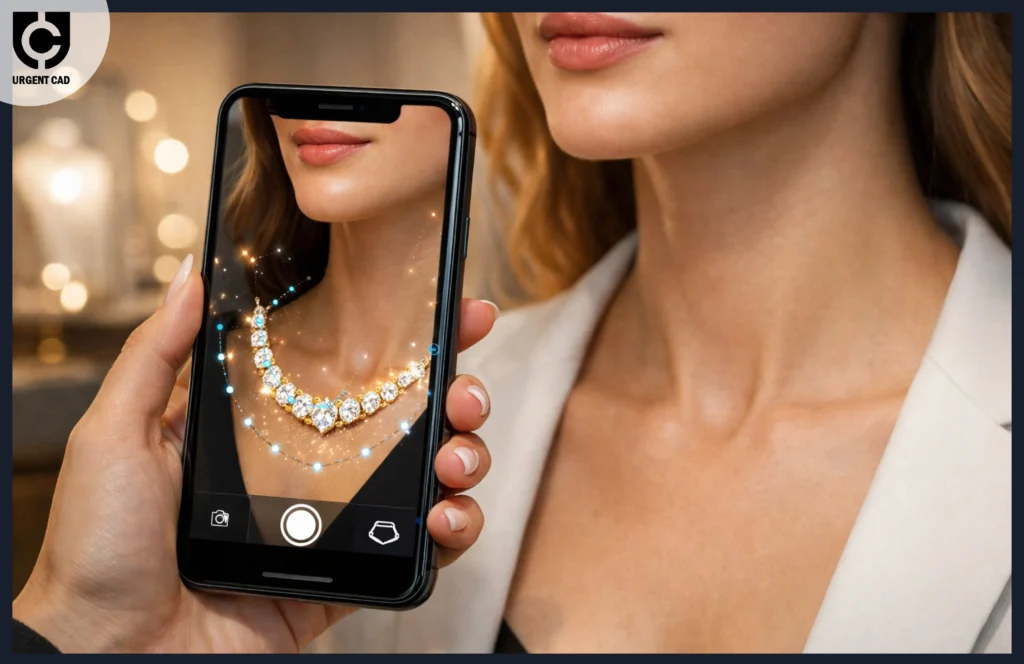
Preface to Digital Transformation in Jewelry
Jewelry shopping has always been a deeply personal experience. People don’t just buy beautifiers they buy memories, feelings, and sometimes even pledges. But let’s be honest, traditional jewelry shopping hasn’t always kept up with modern expectations. Long store visits, limited stock, and uncertainty about how a piece looks can make the process stressful. Today, digital innovation is reshaping the way customers explore jewelry, giving them control and comfort from anywhere.
Technology has stepped into the limelight, helping brands bridge the gap between online convenience and in-store experience. Virtual try-ons are one of the most exciting developments, allowing shoppers to see exactly how a ring, choker, or pair of earrings looks before purchasing.
What Are AI-Powered Virtual Try-Ons?
Virtual AI-powered try-ons are interactive digital tools that let customers try jewelry on themselves using a smartphone or computer camera. Instead of imagining how a product might look, shoppers can see a realistic simulation instantly.
The Technology Behind Virtual Try-Ons
Behind the scenes, advanced image recognition, 3D modeling, and intelligent algorithms work together to place jewelry onto a user’s face or hands. The system adjusts angles, lighting, and proportions automatically, making the experience feel natural and accurate.
Augmented Reality and Machine Learning Basics
Augmented reality overlays digital images onto real-world visuals, while machine learning helps systems recognize facial features and movements. Together, they create a seamless digital mirror that responds in real time.
Why Jewelry Retail Needed Innovation
Jewelry retail has traditionally depended on physical showrooms. While they offer a tactile experience, they come with limitations.
Traditional Shopping Challenges
Customers often struggle with travel time, limited inventory, and the pressure of making decisions quickly. Online shopping introduced convenience but lacked visualization. Virtual try-ons bridge that gap by combining flexibility with realism.
How Virtual Try-Ons Work Step by Step
Curious how the magic happens? The process is surprisingly straightforward.
Face and Hand Mapping
The system scans key features such as face shape, ear placement, or finger dimensions. This ensures the jewelry sits correctly on the digital representation.
Real-Time Rendering
Once mapped, the technology displays jewelry instantly. As the user moves, the piece shifts naturally, reflecting light and shadow to create a realistic look.
Benefits for Jewelry Customers
Shopping for jewelry becomes more engaging and less risky.
Convenience and Confidence
Customers can try multiple styles without leaving home. No more guessing whether a choker length suits an outfit or if earrings complement a haircut.
Personalized Recommendations
Smart systems learn preferences over time. If someone frequently chooses minimalistic designs, the platform can suggest similar pieces, making the shopping journey smoother.
Benefits for Jewelry Retailers
Virtual try-ons aren’t just a customer perk they’re a powerful business tool.
Increased Conversion Rates
When shoppers visualize products clearly, they feel more confident in their decisions. This often leads to faster purchases and higher sales.
Reduced Returns
One of the biggest headaches in online jewelry sales is product returns. Accurate previews help customers choose the right item the first time, saving time and resources.
The Role of CAD in Jewelry Design and Try-Ons
Design technology like CAD plays a crucial role in bringing digital jewelry experiences to life. By enabling precise 3D modeling, designers can create accurate virtual replicas that match the final product. These detailed models allow customers to see every curve and sparkle, making digital previews more trustworthy.
Enhancing Online Shopping Experiences
Virtual try-ons turn static product pages into interactive experiences. Instead of scrolling endlessly through images, customers actively explore styles. It’s like turning an online catalog into a personalized showroom.
Boosting Omnichannel Retail Strategies
Modern jewelry brands operate both online and offline. Virtual try-ons connect these worlds seamlessly. A customer might explore designs at home, shortlist favorites, and visit a store only for final confirmation. This hybrid approach saves time while enhancing satisfaction.
Virtual Try-Ons for Custom Jewelry
Bridal and Luxury Pieces
Customization is a growing trend in jewelry, especially for engagement rings and special occasions. Bridal shoppers can experiment with stone sizes, metal colors, and design variations digitally. Luxury brands can offer exclusive previews without needing physical samples for every combination.
Challenges and Limitations
Technology Barriers
High-quality visuals require good cameras and strong internet connections. Some users may face performance issues on older devices.
Customer Trust
Not everyone trusts digital representations immediately. Brands need clear communication and accurate visuals to build confidence.
Future Trends in Virtual Jewelry Experiences
3D Modeling and Hyper-Realistic Visualization
Advancements in graphics will make digital jewelry almost indistinguishable from real life. Features like dynamic lighting and texture simulation will elevate realism to new heights.
Tips for Jewelry Businesses Adopting Virtual Try-Ons
- Start with best-selling products to test customer response.
- Focus on high-quality 3D models for accuracy.
- Integrate try-ons directly into product pages.
- Offer tutorials so customers understand how to use the feature.
- Collect feedback and continuously improve the experience.
Real-Life Use Cases and Success Stories
Many jewelry brands have seen dramatic improvements after adopting virtual try-ons. Customers spend more time exploring collections, leading to stronger brand engagement. Some businesses report fewer abandoned carts and higher average order values. Shoppers feel empowered because they can experiment freely, just like in a physical store but without time pressure.
Conclusion
Jewelry shopping is evolving faster than ever. Virtual try-ons blend technology with creativity, making the experience more interactive, personalized, and enjoyable. Customers gain confidence through realistic previews, while retailers benefit from higher engagement and fewer returns. As technology continues to advance, digital jewelry experiences will become even more immersive, reshaping how people discover and buy their favorite pieces. The magic lies not just in the sparkle of stones but in the seamless mix of innovation and imagination.
FAQs
1. Are virtual try-ons accurate for jewelry sizing?
They provide a close visual estimate, but final sizing should still be verified with measurements.
2. Do customers need special devices for virtual try-ons?
Most modern smartphones and laptops with cameras work perfectly.
3. Can virtual try-ons be used for custom jewelry designs?
Yes, many platforms allow users to preview custom variations before placing orders.
4. Do virtual try-ons improve online sales?
Many retailers report higher engagement and improved conversion rates after implementation.
5. Is virtual try-on technology suitable for small jewelry businesses?
Absolutely. Scalable solutions make it accessible even for emerging brand

