
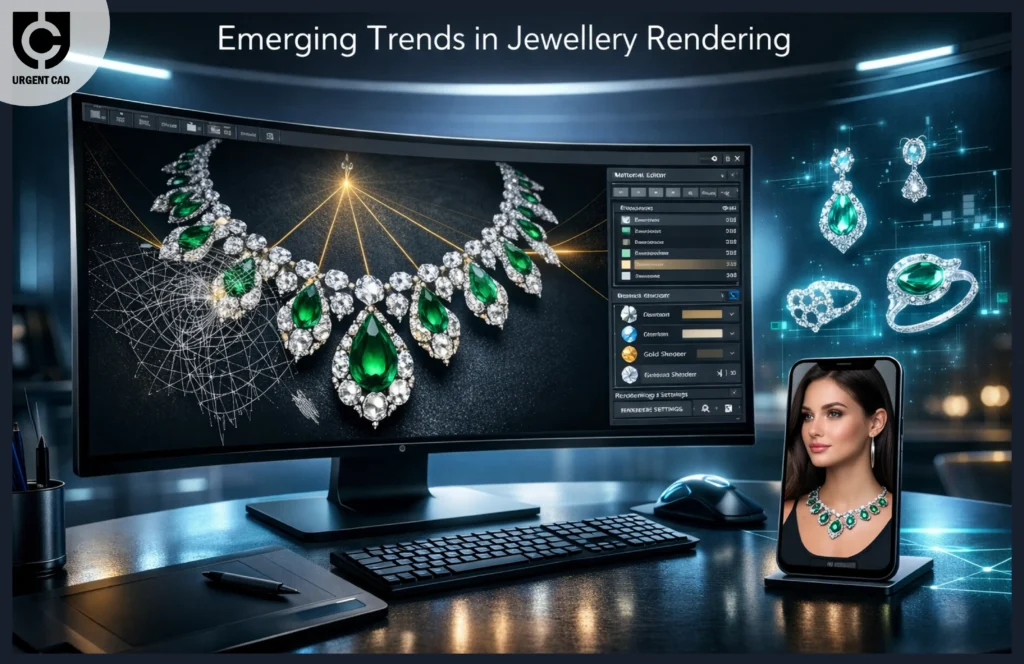
Jewellery is no longer just about creating attractive images. It has become the sparkle of modern jewellery design. Today, customers don’t just want to imagine how a piece will look they want to see it, feel it, and almost experience it before it even exists.
In simple terms, jewellery transforms ideas into realistic digital visuals. It bridges creativity and technology, helping designers, brands, and customers connect on a deeper level. And honestly, the speed at which this field is evolving is nothing short of mind-blowing.
Let’s explore the emerging trends in jewellery and understand what you need to know to stay ahead.
What Is Jewellery Rendering?
Traditional Sketching vs Digital Rendering
In the past, jewellery designers relied heavily on hand-drawn sketches. These sketches were artistic and emotional, but often limited. Customers frequently struggled to visualize the final product.
Digital it’s changed everything. Designers can now create ultra-detailed visuals that look almost real. Stones sparkle, metals shine, and shadows behave naturally giving imagination a physical form.
The Rise of 3D Modelling in Jewellery
3D modelling has become the backbone of jewellery it’s. Designers can sculpt rings, necklaces, and earrings with incredible precision.
Instead of guessing proportions, they can measure, adjust, and perfect designs instantly. This shift has made jewellery rendering faster, smarter, and more accurate than ever before.
The Role of Technology in Jewellery Rendering
CAD Software in Jewellery Design
Computer-Aided Design (CAD) software has revolutionized jewellery it’s. Tools like Rhino, Matrix, and Blender allow designers to create complex structures that were once impossible.
- Experiment freely
- Reduce design errors
- Save time and production costs
New platforms such as urgentcad are gaining attention for simplifying workflows and improving overall rendering quality.
AI-Powered Rendering Tools
Artificial Intelligence is transforming jewellery in powerful ways. AI can now:
- Suggest design variations
- Optimize lighting and textures
- Generate realistic visuals within seconds
It’s like having a digital assistant that never sleeps.
Real-Time Visualization Tools
Real-time it’s allows designers and customers to see changes instantly. Switching metals, resizing diamonds, or adjusting lighting can be done in seconds.
This trend is redefining customer expectations.
Hyper-Realistic 3D Rendering
Photorealistic Textures and Materials
Modern jewellery focuses heavily on realism. Designers now simulate:
- Metal reflections
- Gemstone refractions
- Surface imperfections
The result is visuals that look indistinguishable from real photographs.
Advanced Lighting Techniques
Lighting is the secret ingredient in jewellery. Soft shadows, dramatic highlights, and accurate reflections make jewellery visually irresistible.
AR and VR in Jewellery Rendering
Virtual Try-On Experiences
Augmented Reality (AR) allows customers to try jewellery virtually using smartphones. Rings, necklaces, and earrings can be visualized on the body without physical trials.
This is changing online jewellery shopping forever.
Immersive Design Visualization
Virtual Reality (VR) takes to the next level. Designers can explore virtual showrooms and examine jewellery from every angle.
Sustainable and Ethical Rendering Trends
Eco-Friendly Digital Workflows
Digital rendering reduces the need for physical prototypes, resulting in:
- Lower material waste
- Reduced carbon footprint
- Faster design cycles
Transparent Design Storytelling
Consumers now care deeply about where their jewellery comes from. it’s is used to visually tell stories about materials, craftsmanship, and ethical sourcing.
Personalization and Custom Jewellery Rendering
Customer-Driven Customization
Personalization is no longer optional. Customers want jewellery that reflects their identity. it’s tools allow designers to create customized visuals based on individual preferences.
Data-Driven Jewellery Visualization
Brands are using customer data to predict trends and personalize designs, making smarter and more strategic.
AI and Automation in Jewellery Rendering
Generative Design Tools
Generative design uses algorithms to create multiple design options automatically. Designers can explore hundreds of variations in minutes.
Automated Rendering Workflows
Automation has drastically reduced time. Tools like urgentcad help eliminate repetitive tasks, allowing designers to focus on creativity.
The Business Impact of Advanced Jewellery Rendering
- Faster design approvals
- Reduced revisions
- Higher sales conversion rates
Simply put, great leads to better business results.
Future Outlook of Jewellery Rendering
The future looks exciting:
- AI-driven design dominance
- Mainstream AR and VR adoption
- Rapid growth of digital jewellery
Conclusion
Jewellery is no longer just a technical process it is an art, a science, and a powerful business strategy.
From hyper-realistic visuals to AI-driven design and metaverse jewellery, the industry is evolving at lightning speed.
One thing is clear the future of jewellery isn’t just bright it’s glowing.
FAQs
1. What is jewellery rendering in simple terms?
Jewellery is the process of creating realistic digital images of jewellery designs using software and technology.
2. Why is jewellery rendering important for brands?
It helps brands visualize designs, attract customers, reduce production costs, and increase sales.
3. How is AI changing jewellery rendering?
AI automates design processes, enhances realism, and generates multiple design variations quickly.
4. What role does urgentcad play in jewellery rendering?
urgentcad helps streamline workflows, improve efficiency, and support modern jewellery design processes.
5. What is the future of jewellery rendering?
The future includes AI-driven design, AR/VR experiences, digital jewellery, and hyper-realistic visualization.
